Cameron McVicar
Current position
Archaeologist with South Australian Native Title Services
Where did you study?
I studied at Flinders University for both my undergrad and postgrad but attended University of Adelaide for some courses so I could sneak in some classical archaeology in my undergrad.
How did you become interested in archaeology?
I've gotta be honest and say that it kinda happened by accident. I had originally wanted to study music at uni, however when discussing this with my parents my Dad got "quite upset" about my choice and he "firmly suggested" that I find something that could pay the bills. I had initially had history (and philosophy I think) as my backups (not realising archaeology was much of a thing in Australia). When I talked to Dad about that he mentioned he had heard on the radio that archaeology could actually get you some good pay. I loved the idea about getting to work in history but not sitting in a dusty archive all day every day. To be honest I thought I had got one over on Dad because I didn't think I would ever earn money anyway but still got to do cool stuff (however the hell that flawed teenager logic worked). Turns out it was a great choice and as soon as I got into my studies I was head over heels in love. The rest is history (pun intended).
What archaeological projects are you working on at the moment?
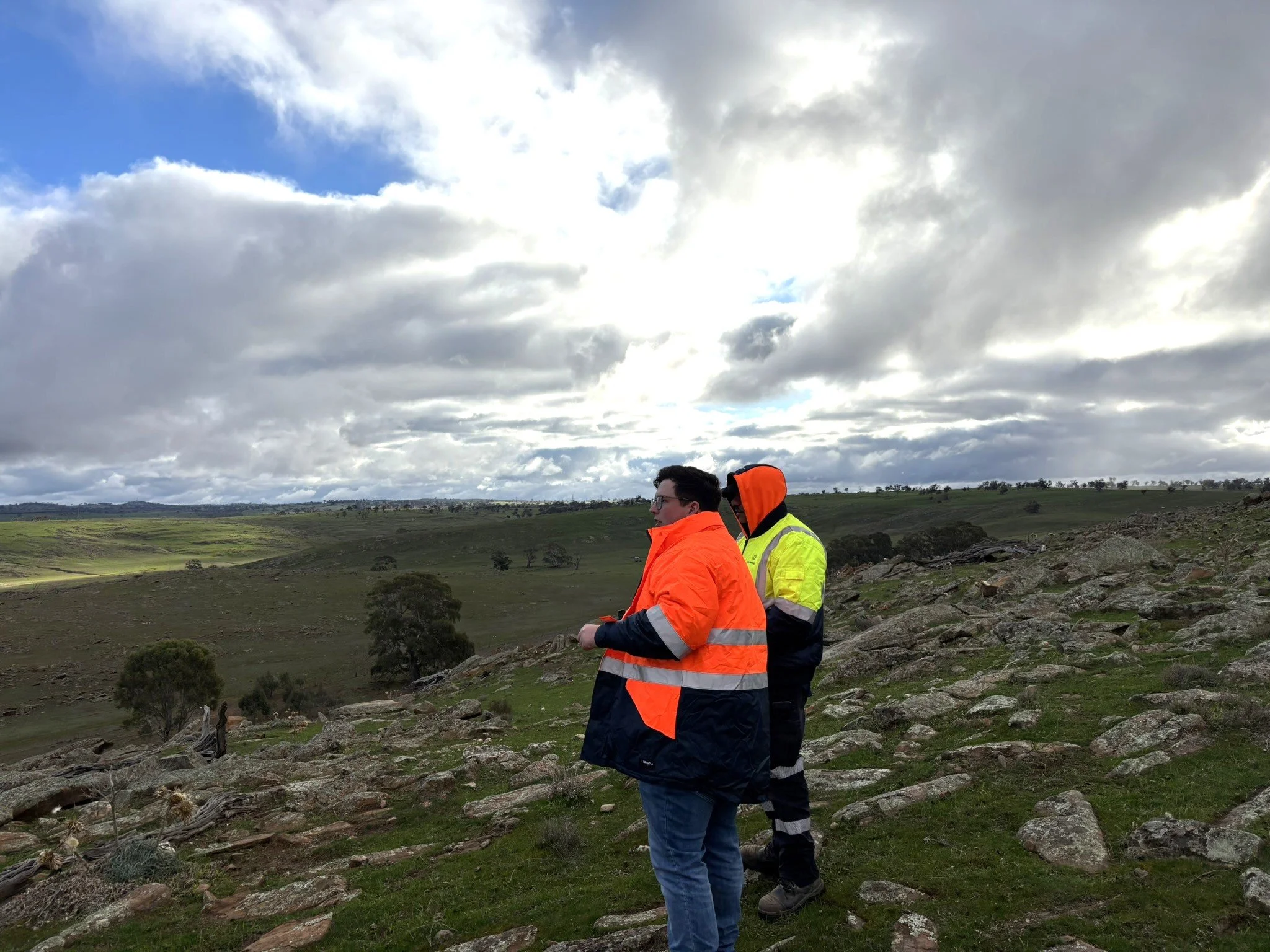
I am currently working for the Native Title Service Provider in SA as an archaeologist and it is a massively diverse role. I get to be out on survey one week, and then in federal court the next, then in the office another writing reports and making maps, and then working on Native Title research on Country with our anthropologists. I work with a range of First Nations throughout SA and have started using archaeological data and research to support those groups in agreement making processes which in turn is helping them build organisational and community capacity. It is very fulfilling, although hectic.
Tell us about one of your most interesting archaeological discoveries
There is a lot which I would love to talk about but which I cannot. A highlight for me though is, as someone who has never been all that interested in rock art, getting to record and study the mostly undocumented rock art through the Adelaide Hills on Peramangk Country who I have been working with for about two years. The shelters and engravings are quite incredible, and it has been a new interest for me to explore.
Tell us about a funny / disastrous / amazing experience that you have had while doing archaeology
I think there is very little quite as heartbreaking and fascinating as watching a trench that has taken weeks to excavate in perfect sandy conditions, with the most perfect and beautiful walls, that you have lived with and sweated through and found some stellar heritage within, very quickly filling with water and watching the way the resulting pool erodes at the surrounding walls becoming the new in paddock swimming pool.
What’s your favourite part of being an archaeologist?
For me, particularly working in the Native Title space, my favourite part of what I do is getting to watch people, who are have been forcibly disconnected from Country, from their home, the place their ancestors have cared for going back tens of thousands of years, get to return to parts of those areas, see where they have created places and landscapes and touch and hold the things that they created. Getting to watch the passion and excitement emerge, the resulting feelings of peace, and the process of healing that happens in those moments is the just the best.
Follow up reading
I don't really have anything to share here, I haven't published and my thesis is not living within the Flinders system, however I think everyone should go and read a good archaeological theory book. It is an area of work which I feel so many neglect and which can enrich the way we do what we do. For those who are not archaeologists, some entry level reads are quite an insight into both the history and ideas which have shaped archaeology. I am quite fond of Matthew Johnson's book, Archaeological Theory: An Introduction.